

Table of Contents
1. Introduction: Understanding Anxiety
2. How Routines and Habits Shape Mental Health
3. Morning Routine to Reduce Anxiety
4. Nighttime Routine for Better Sleep with Anxiety
5. 5-Minute Daily Journal Prompts for Anxiety Relief
6. Best Self-Care Habits to Manage Anxiety
7. What I Do Every Day to Keep Anxiety in Check
8. Conclusion: Your Path to Calm
Introduction
Understanding Anxiety
Anxiety is more than just feeling nervous. It’s a physical and emotional response to stress that can affect your thoughts, body, and behavior. Whether it’s triggered by work, relationships, health, or even the fear of anxiety itself, it can become overwhelming if left unmanaged.
The good news? Anxiety can be reduced through consistent habits and intentional routines. In this guide, I’ll show you how to create daily practices that calm your mind, support better sleep, and bring more control to your life—even on stressful days.
How Routines and Habits Shape Mental Health
The human brain loves predictability. That’s why routines—especially those built on healthy habits—can lower stress hormones, regulate your body clock, and boost your mental resilience.
Some reasons why routines matter for anxiety:
– Reduces uncertainty: Anxiety thrives on the unknown. Routines offer structure and reduce mental chaos.
– Increases dopamine: Regular accomplishments (even small ones) give a dopamine boost.
– Improves sleep and energy: Predictable sleep-wake cycles support hormonal balance and mood stability

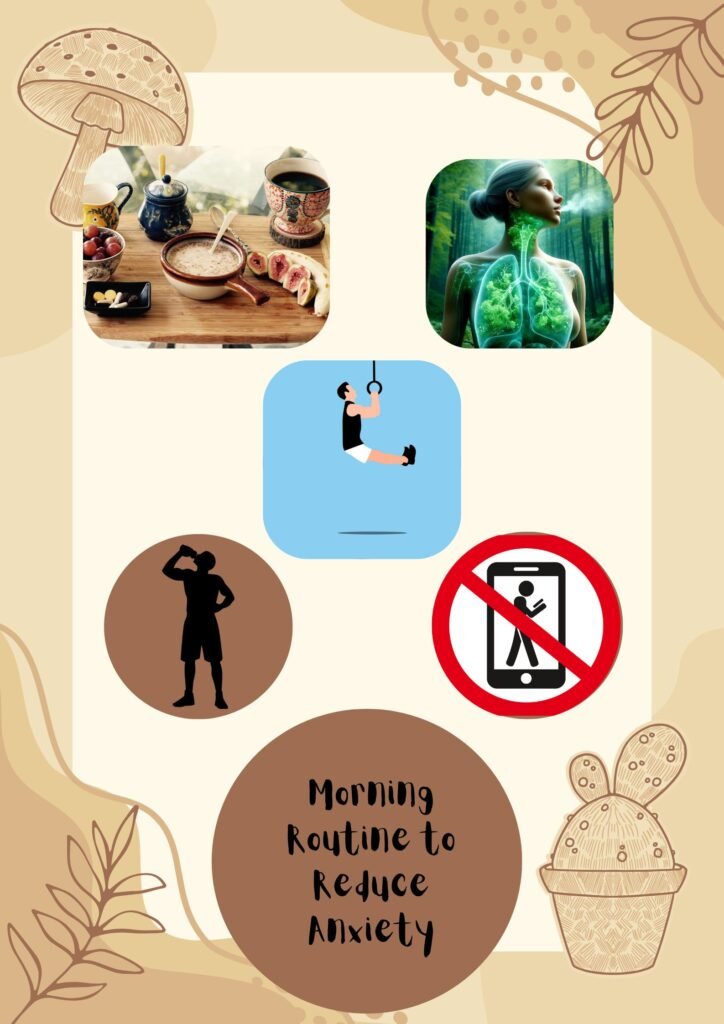
Morning Routine to Reduce Anxiety
The first hour of your day sets the tone for everything that follows. A grounding, mindful morning routine helps reduce cortisol (the stress hormone) and prepares your mind to handle challenges more calmly.
Suggested Morning Routine:
1. Wake Up Without Your Phone – Avoid news and social media. Give your mind a peaceful start.
2. Hydrate – Drink a glass of water to wake up your system.
3. Stretch or Move Gently – Yoga, a walk, or light stretching releases tension stored overnight.
4. 5-Minute Meditation – Try breath work, body scans, or a simple “noticing” meditation.
5. Positive Affirmations – Use calming mantras like: “I am safe. I am grounded.”
6. Set an Intention – Ask: “What do I want to feel today?” or “What’s one small thing I can control?”
7. Eat a Nourishing Breakfast – Avoid high sugar and caffeine early on. Focus on protein and fiber.
Nighttime Routine for Better Sleep with Anxiety
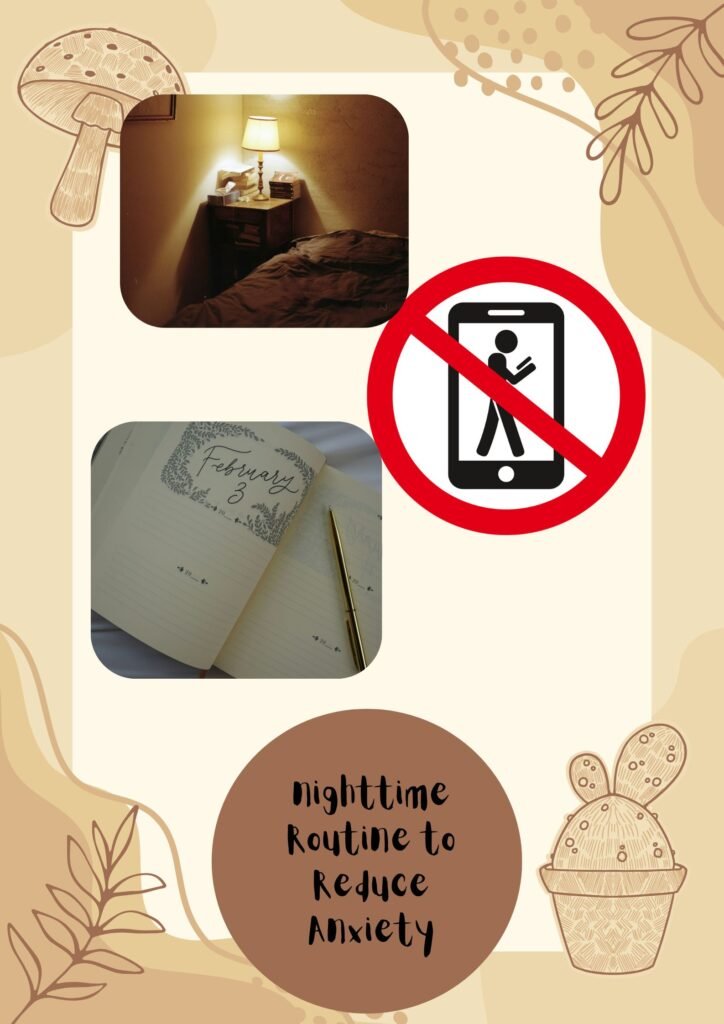
Anxiety often spikes at night. A consistent wind-down routine tells your brain it’s time to rest, not worry.
Nighttime Routine for Anxiety Relief:
1. Dim the Lights One Hour Before Bed – Helps melatonin production.
2. No Screens After 9 PM – Blue light affects your brain’s ability to relax.
3. Calm Your Nervous System – Try a warm bath, lavender essential oil, or calming tea.
4. Journal or Brain Dump – Get thoughts out of your head and onto paper.
5. Guided Meditation or Deep Breathing – Focus on long exhales to activate the parasympathetic system.
6. Gratitude Practice – End the day by writing 3 things that went well or made you smile.
7. Sleep Environment – Make sure your room is cool, dark, and free of clutter.
5-Minute Daily Journal Prompts for Anxiety Relief
Journaling helps bring clarity and self-awareness. Use these prompts daily (morning or evening):
1. What am I feeling anxious about right now?
2. What evidence do I have that things will work out?
3. What is one small step I can take today to support myself?
4. What do I need to hear right now? (Write it like you’re your own best friend.)
5. What am I grateful for today, no matter how small?

Best Self-Care Habits to Manage Anxiety
These practices go beyond pampering—they’re science-backed strategies for long-term anxiety reduction.
– Regular Exercise: At least 20 minutes of movement a day (walking, swimming, dancing).
– Nutrition: Omega-3s, magnesium, and whole foods help regulate mood.
– Limit Stimulants: Reduce caffeine, nicotine, and sugar.
– Social Connection: Text a friend, join a group, or simply smile at a stranger.
– Creative Outlets: Art, music, writing, or anything that brings flow.
– Nature Time: Even 10 minutes outside reduces anxiety significantly.
– Therapy or Coaching: Don’t go it alone—professional support matters

What I Do Every Day to Keep Anxiety in Check
Here’s my personal routine that helps me manage anxiety daily:
Morning:
– Wake up by 7:30 AM, no phone for 30 minutes.
– Stretch, hydrate, meditate for 5–10 minutes.
– Write a quick journal entry or intention.
– Eat breakfast with protein + fiber.
Daytime:
– 10–15 minute walks after lunch.
– Work in focused time blocks with breaks.
– Use a calming playlist or background sound.
– Check in with a friend or accountability buddy.
Evening:
– Light dinner (no caffeine after 3 PM).
– Wind down with herbal tea and reading.
– Journal to release worries.
– Sleep by 10:30 PM in a cool, dark room.
Weekly Care:
– Therapy session on Wednesday
– Nature hike or creative hobby on the weekend
– Digital detox on Sundays
Conclusion: “Your Path to Calm”
Anxiety isn’t something we “fix” in a day. It’s something we learn to live with by making consistent, compassionate choices that support our nervous system and overall wellbeing. By building these routines into your day, you’re creating a safer space inside yourself—one step at a time.