

A Practical Guide to a Calmer Life
Introduction
In today’s fast-moving world, feeling overwhelmed has become a common part of daily life. Between work, family responsibilities, and personal goals, many people find themselves stressed by the sheer volume of tasks. According to the American Psychological Association (APA), 67% of adults in the U.S. report that stress interferes with their ability to manage time effectively. This blog explores how mastering time management can significantly reduce overwhelm and lead to long-term stress relief. With research-backed strategies, digital tools, and real-world case studies from major U.S. cities, readers will discover a practical framework for living more calmly and productively.
Outline
- The Relationship Between Time, Overwhelm, and Stress
- Common Time Traps That Increase Stress
- Time Management Techniques That Actually Work
- How Technology Can Help (or Hurt) Time Management
- City Spotlight: Chicago’s Wellness & Time Efficiency Campaign
- Building a Sustainable Daily Routine for Stress Relief
- FAQs
- Conclusion
The Relationship Between Time, Overwhelm, and Stress
Overwhelm occurs when responsibilities exceed perceived time and energy. Chronic overwhelm leads to stress, which affects mood, focus, sleep, and even physical health. According to a 2024 report by the National Institute of Mental Health, unmanaged time pressure is one of the top five contributors to workplace burnout.
Experts like Dr. Julie Morgenstern, author of Time Management from the Inside Out, emphasize that “Time management isn’t just about productivity—it’s about emotional regulation.” By gaining control over time, individuals regain a sense of calm and confidence.
Common Time Traps That Increase Stress
Many everyday habits unknowingly sabotage effective time use.
Key time traps include:
- Multitasking: Trying to juggle multiple tasks at once increases mental fatigue and lowers productivity.
- Lack of Prioritization: Without a clear system, urgent tasks overshadow important ones.
- Digital Distractions: The average person checks their phone 144 times per day, according to a 2023 Deloitte study.
- Poor Boundaries: Constant availability to others disrupts focus and recovery time.
Recognizing these patterns is the first step in building better habits that reduce overwhelm.
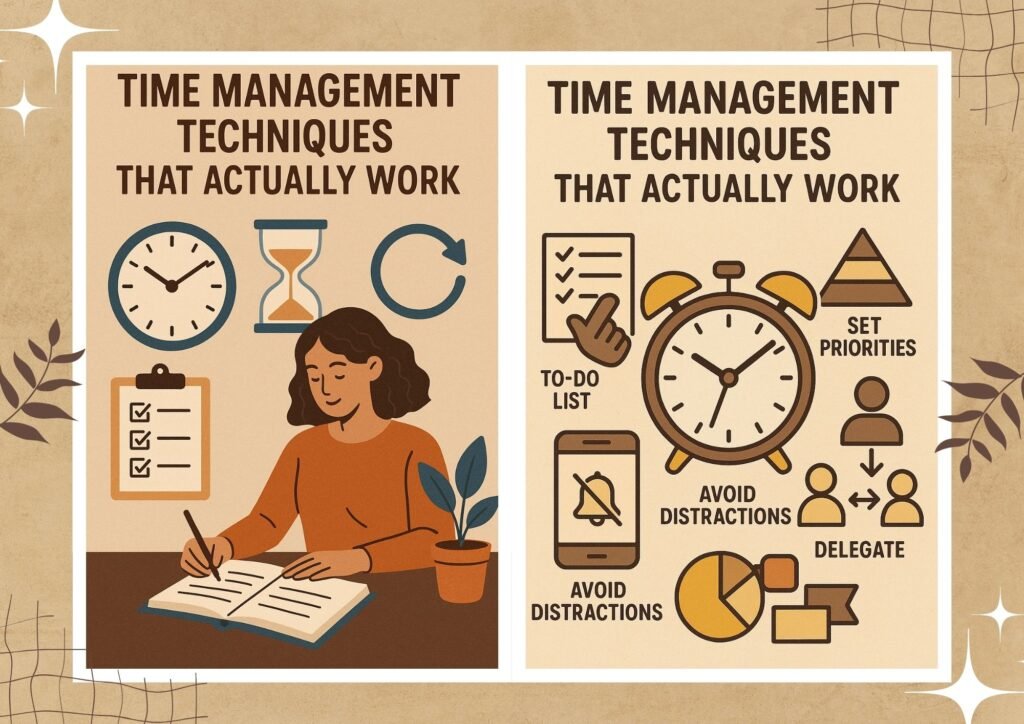
Time Management Techniques That Actually Work
A few proven time management strategies that lower stress include:
- Time Blocking: Assigning specific hours to different activities creates structure and improves mental clarity.
- The 2-Minute Rule: If a task takes less than two minutes, do it immediately.
- Eisenhower Matrix: Categorize tasks into four quadrants—urgent/important, important/not urgent, etc.—to determine priority.
- Pomodoro Technique: Work in 25-minute focused sessions followed by a 5-minute break.
A 2023 University of Michigan study found that people using structured techniques like time-blocking reduced their stress levels by up to 30%.
How Technology Can Help (or Hurt) Time Management
Digital tools can improve or disrupt time management depending on how they’re used.
Helpful Tools:
Toggl: Tracks time spent on tasks and improves awareness.
Notion & Trello: Organize to-do lists and streamline project management.
Focus Will: Uses neuroscience-based music to improve concentration.
Harmful Habits:
Constant Notifications: Apps like Instagram and Slack create frequent interruptions.
App Overload: Using too many tools creates digital clutter and reduces focus.
According to a 2024 Pew Research survey, 41% of adults in major U.S. cities like Los Angeles and Houston have downloaded at least one productivity or mindfulness app to reduce stress.
City Spotlight: Chicago’s Wellness & Time Efficiency Campaign
In 2023, the City of Chicago piloted the “Time Smart Chicago” initiative to combat stress and burnout among city workers and small business employees. The campaign offered:
- Free workshops on time blocking and digital detoxing
- Mindfulness sessions during lunch breaks
- Employer guidelines on reasonable meeting hours and task delegation
- A post-program analysis showed a 28% reduction in reported burnout and a 21% increase in employee satisfaction within participating departments.
Building a Sustainable Daily Routine for Stress Relief
Effective routines lead to better time use and emotional stability.
Here’s how to create a sustainable schedule:
- Morning Ritual: Start with a brief activity (like journaling or stretching) to establish calm.
- Time Audits: Track how time is spent over 3–5 days to identify gaps.
- Themed Days: Assign themes like “Focus Friday” or “Admin Tuesday” for mental clarity.
- Schedule Breaks: Rest is not optional—schedule short breaks and longer downtimes.
- Evening Wind-Down: Limit screen time, plan the next day, and practice a calming activity before bed.
When routines reflect personal values and goals, stress naturally decreases.

Frequently Asked Questions (FAQ)
Q1: Can time management help with anxiety?
A: Yes. Time management helps reduce unpredictability and gives a sense of control, both of which are critical for managing anxiety.
Q2: What is the most beginner-friendly time management system?
A: The time-blocking method is intuitive and adaptable. Start by blocking 3 major tasks per day and expand from there.
Q3: What if I always underestimate how long tasks take?
A: Try buffer scheduling—add 15–30% extra time to each task. Over time, tracking your estimates vs. actuals will improve accuracy.
Q4: How long does it take to form a new time management habit?
A: Research from University College London (UCL) suggests that forming a new habit takes 66 days on average. Consistency is key.
Conclusion
Time management is a foundational skill that directly impacts stress and emotional well-being. By avoiding common time traps, embracing structured techniques, and using tech tools wisely, individuals can reclaim their schedules and reduce overwhelm. Initiatives like “Time Smart Chicago” show that even at the community level, change is possible. In a world filled with demands and distractions, making intentional choices about how time is spent is not just productive—it’s essential for peace of mind.
Meta Description:
Learn how smart time management can reduce stress and daily overwhelm. Explore science-backed strategies, real-time data, and city case studies in this 2000-word blog.
Tags: Time Management, Stress Relief, Overwhelm, Productivity, Mindful Scheduling