

Introduction:
The Problem, the Question & the Solution
Millions silently struggle with mental health challenges like anxiety, depression, and emotional burnout. The problem? Therapy isn’t always accessible or affordable for everyone. Without daily support tools, individuals often feel stuck, isolated, and overwhelmed.
So what’s the solution? Mental health worksheets—simple, guided resources that empower people to understand their emotions, develop coping skills, and promote self-growth. But what are the best types, and how can they be used effectively?
In this article, readers will discover why worksheets are powerful therapy tools, how to use them, and where to find the most effective templates—including CBT therapy worksheets, self-awareness worksheets, coping skills worksheets, and more.
🧠 Table of Contents
- What Are Mental Health Worksheets?
- Why Worksheets Work: The Psychology Behind It
- Best Types of Mental Health Worksheets
- How to Use Worksheets Effectively in Real Life
- Therapy Worksheets For Kids, Teens, and Adults
- Where to Download Mental Health Worksheets (Free + Paid)
- FAQs About Mental Health Worksheets
What Are Mental Health Worksheets?
Mental health worksheets are structured documents or templates designed to help individuals better understand their thoughts, feelings, and behaviours. They are widely used in therapy sessions, group counselling, schools, and self-guided routines.
These worksheets help improve self-awareness, track emotional patterns, reduce anxiety, and develop personal coping strategies.
They’re often used alongside talk therapy or as part of mental health work activities in counselling. Now, with increasing access to digital formats like Google Sheets, more people are turning to editable, printable versions for daily emotional support.
These tools can include:
- Self care worksheets for stress management
- Mindfulness worksheets to promote presence and calm
- CBT therapy worksheets to reframe negative thinking
- Self development worksheets to build goals and habits
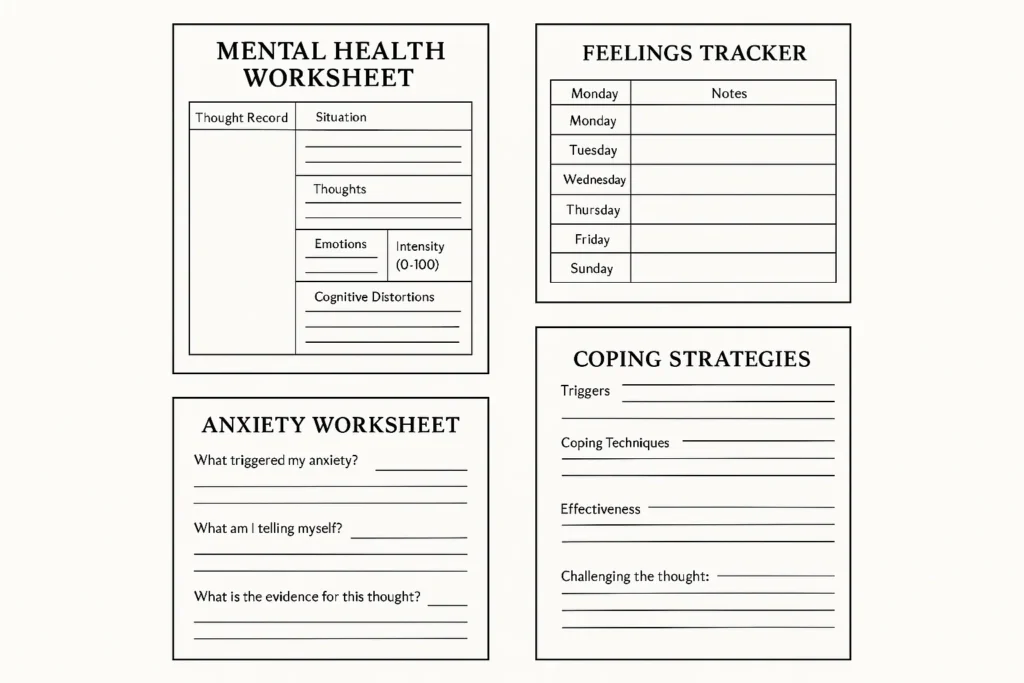
NLP Entities/LSI Keywords: mental wellness tools, cognitive behavior, therapy strategies, journaling prompts, emotional regulation, therapeutic reflection
Why Worksheets Work: The Psychology Behind It
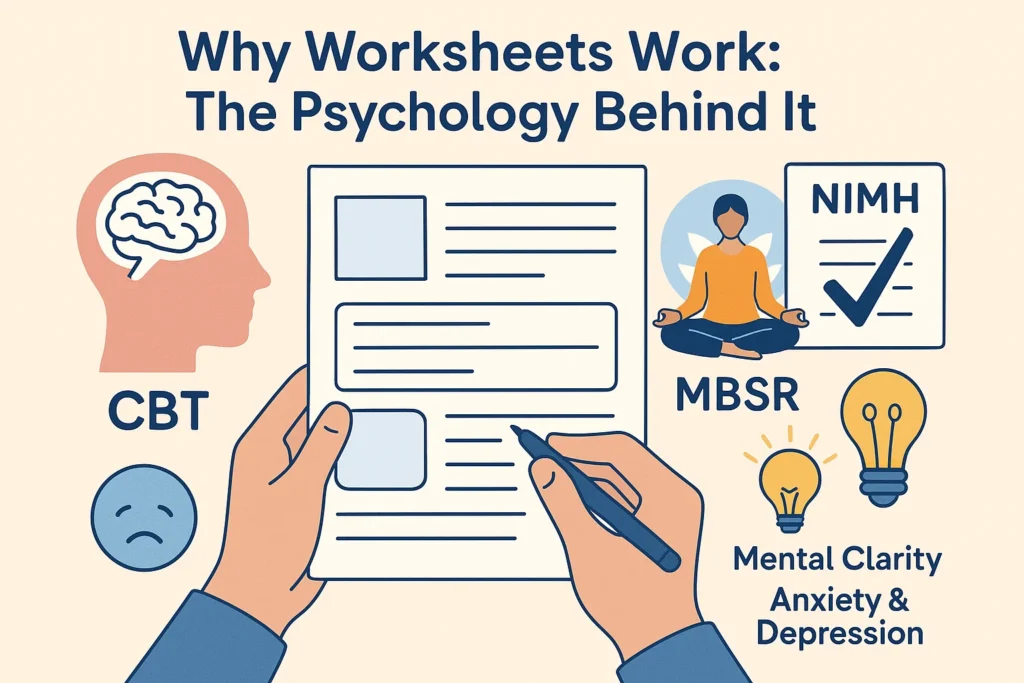
Mental health professionals rely on worksheets because they reinforce proven psychological practices like Cognitive Behavioural Therapy (CBT) and Mindfulness-Based Stress Reduction (MBSR). In fact, research published by the National Institute of Mental Health (NIMH) supports that structured self-reflection tools significantly enhance mental clarity and reduce symptoms of anxiety and depression.
Key benefits of using worksheets include:
- Externalization: Turning feelings into written form helps make emotions manageable.
- Behavioural activation: Goal-based tasks increase motivation and reduce depressive symptoms.
- Emotional literacy: Promotes self-awareness and improved emotional vocabulary.
- Therapeutic continuity: Helps clients track progress between sessions.
A 2023 study by APA found that CBT-based worksheets improved treatment outcomes by 45% when used consistently over 6 weeks.
Best Types of Mental Health Worksheets
With hundreds of options available, here are the most effective worksheet types for different goals:
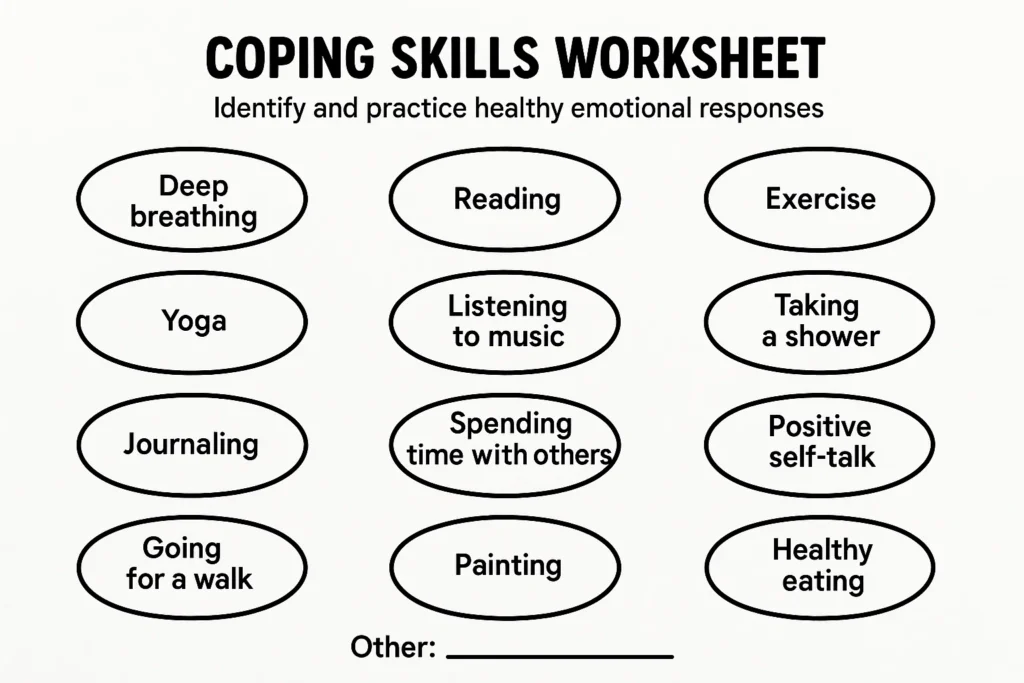
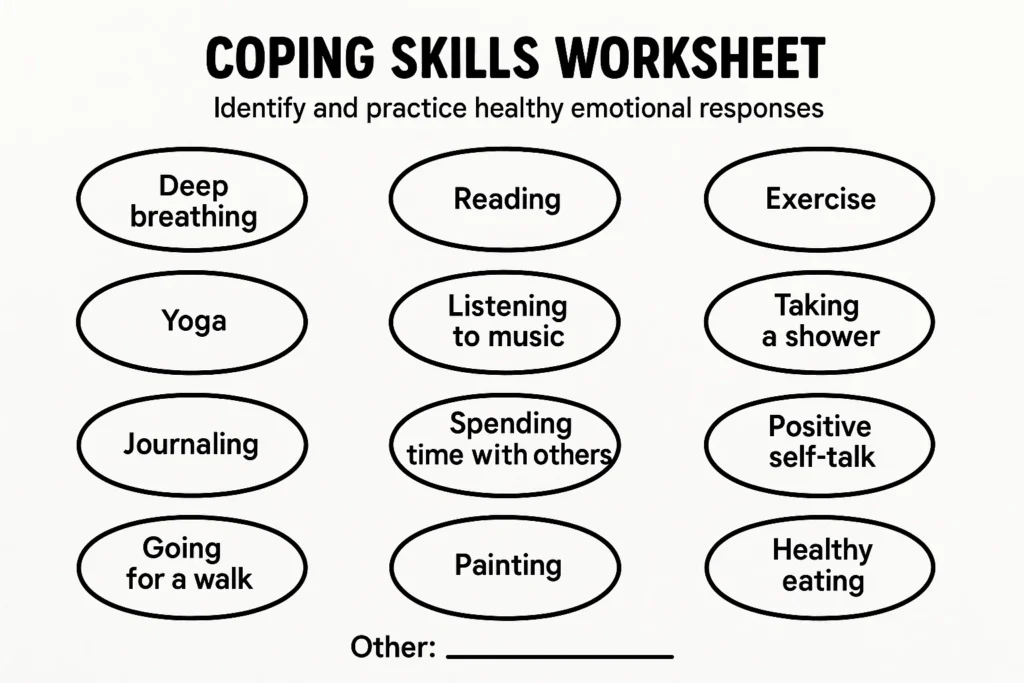
A. Coping Skills Worksheets
Designed to identify and practice healthy emotional responses.
Popular for stress management and trauma recovery.
✅ Use for: Teens, young adults, trauma survivors
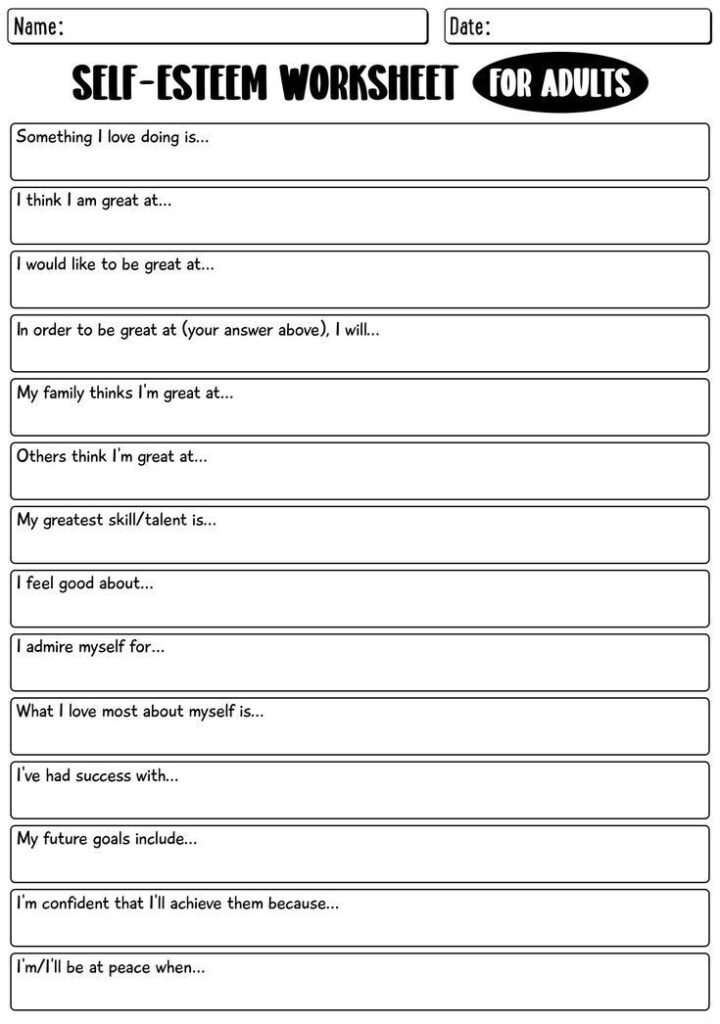
B. Self Care Worksheets
Focus on routines, daily habits, and prioritizing mental rest.
✅ Use for: Burnout, fatigue, depression, postpartum support
C. Mindfulness Worksheets
Encourage presence and awareness through journaling, breathing, and sensory activities.
✅ Use for: Anxiety, rumination, emotional regulation
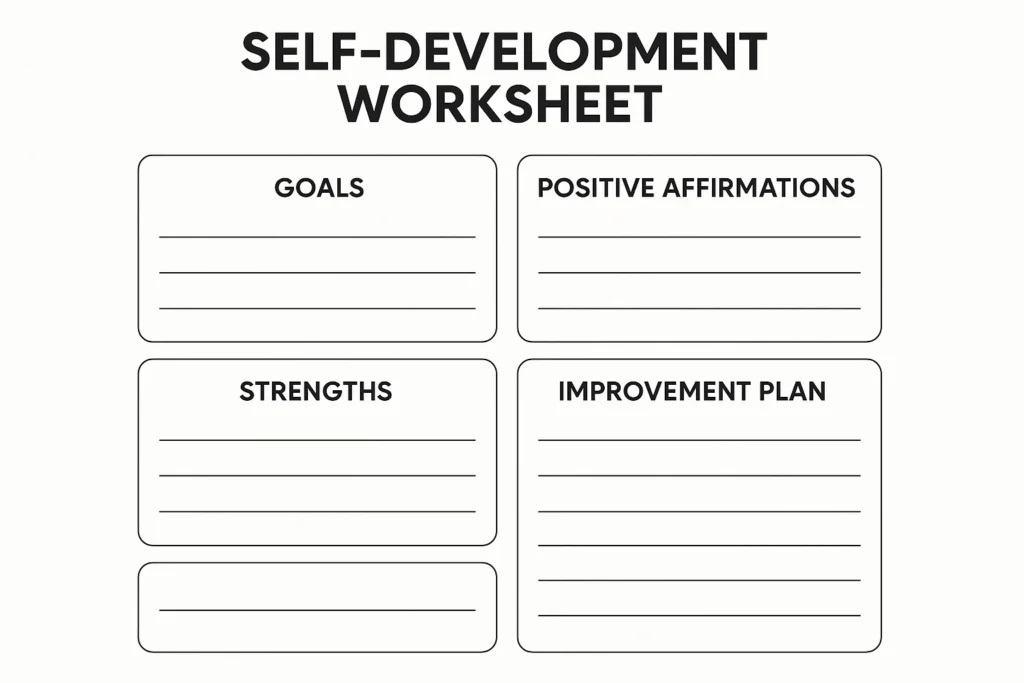
D. Self Development Worksheets
Great for habit tracking, confidence building, and personal growth.
✅ Use for: Goal-setting, career clarity, self-esteem
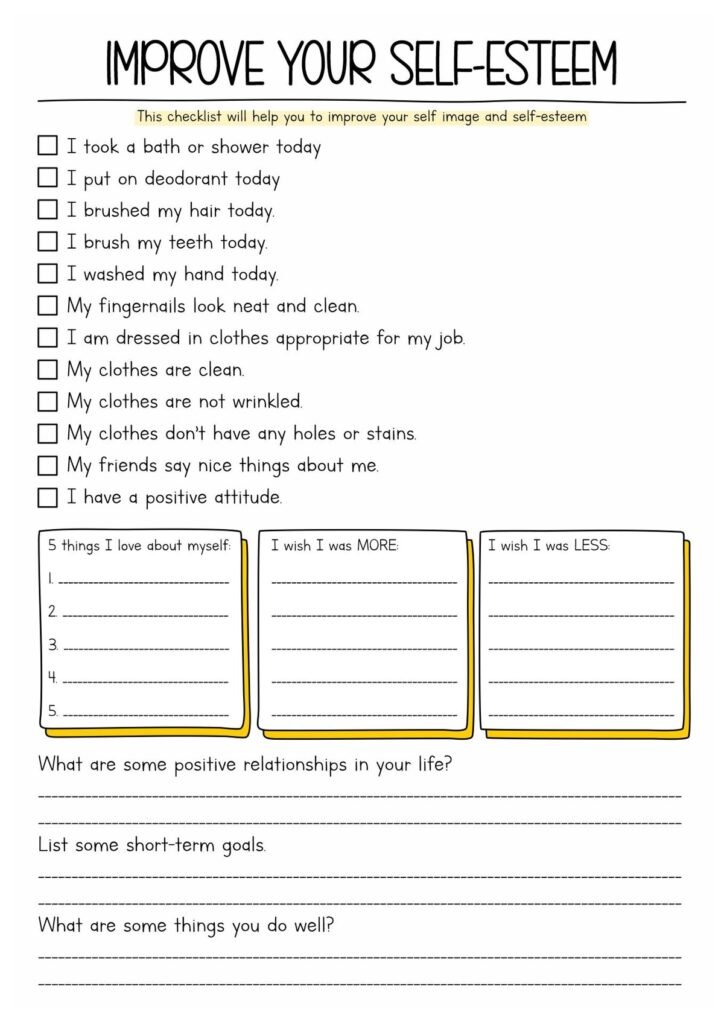
E. Self Awareness Worksheets
Dig deeper into thought patterns, emotional triggers, and identity.
✅ Use for: Identity work, therapy prep, journaling
F. CBT Therapy Worksheets
Based on Cognitive Behavioural Therapy, these help users identify negative thought loops and reframe them.
✅ Use for: Depression, anxiety, OCD, PTSD
G. Counselling Worksheets Therapy Tools
Used in sessions to support communication and therapeutic breakthroughs.
✅ Use for: One-on-one or group counselling settings
How to Use Worksheets Effectively in Real Life
Using worksheets casually won’t deliver long-term results. Like any mental health practice, consistency and intention are key.
📌 Tips to Maximize Results:
- Be consistent: Schedule time weekly or daily to reflect and write
- Customize: Adapt templates to suit personal needs or triggers
- Use digital tools: Google Sheets lets you track mood or habits over time
- Pair with therapy: Share insights with your counsellor for more tailored care
- Create a mental health binder: Organize your completed worksheets for reflection
📱 Tip: Many people combine Google Sheets mood trackers with printable CBT templates for a hybrid experience—offline for deep journaling, online for data insights.
Therapy Worksheets For Kids, Teens, and Adults
Different age groups require tailored approaches. Here’s how worksheets can support every age:
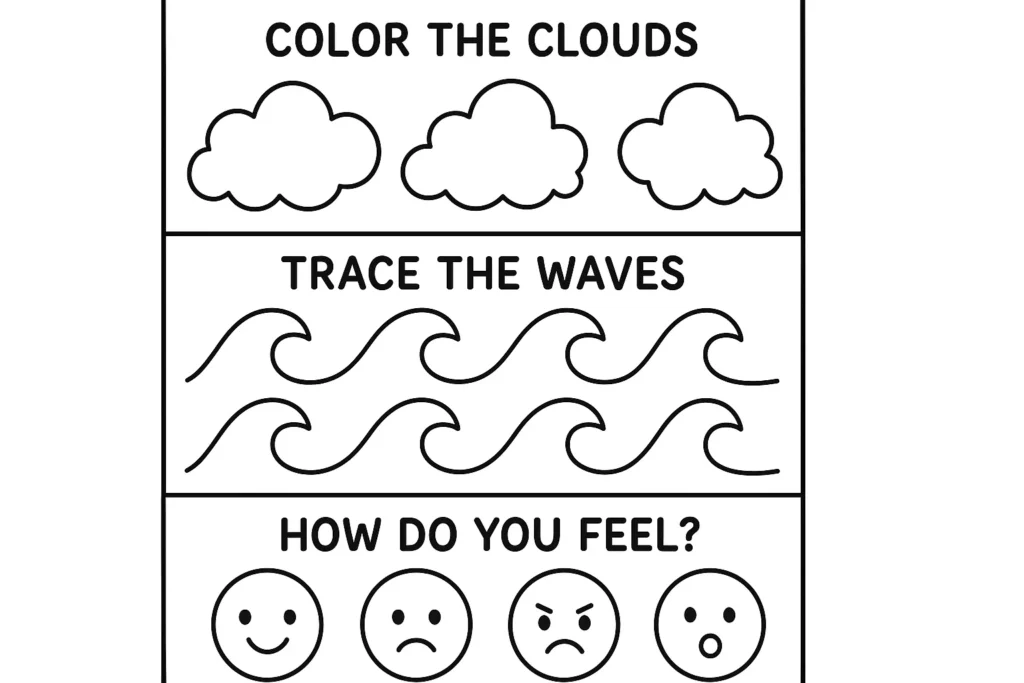
👧 Kids
Use therapy worksheets for kids with visuals, colouring pages, and emotion faces. Focus on identifying feelings and expressing them safely.
Popular Activities:
- Feelings thermometer
- What made me happy today?
- Draw-your-day journals
🧑 Teens
Adolescents benefit from coping skills worksheets that address peer pressure, self-esteem, and identity. Include gratitude logs and boundary-setting exercises.
👩 Adults
Combine CBT therapy worksheets, self development worksheets, and mindfulness worksheets to reduce stress, set goals, and reflect on behaviours.
Where to Download Mental Health Worksheets (Free + Paid)
Finding credible resources is essential. Below are top-rated platforms offering printable and digital mental health worksheets:
| Website | Features | Format |
| TherapistAid.com | Free and evidence-based | Printable PDFs |
| Mindfulmazing.com | Worksheets for adults and kids | Paid bundles |
| PositivePsychology.com | Academic-grade tools | Requires signup |
| Google Sheets Templates | Mood tracking & journaling | Editable online |
| Teachers Pay Teachers | Therapist-created tools | Great for kids & educators |
💡 Tip: Search Pinterest for “mental health activity ideas” or “printable self care worksheets” for creative, visual options.
FAQs About Mental Health Worksheets
Q1: Are worksheets a replacement for therapy?
No. They are a supplement and should not replace licensed mental health care.
Q2: Can I use mental health worksheets in schools or group therapy?
Yes. Counselling worksheets therapy tools are widely used by school counsellors and therapists.
Q3: Are these useful for neurodivergent individuals?
Many are! Choose worksheets with structure and visual support for ADHD, ASD, or trauma-sensitive needs.
Q4: Can I create my own mental health worksheet?
Absolutely. Use Google Docs or Sheets to design templates based on your goals.
Q5: Do these worksheets work for couples or families?
Yes, especially communication-focused or boundary-setting sheets.
Final Thoughts
Worksheets for mental health offer a flexible, effective, and low-cost way to manage emotions, build healthy habits, and increase self-awareness. Whether you’re a therapist, teacher, parent, or someone on a personal growth journey, the right worksheet can spark meaningful change.
By incorporating tools like self care worksheets, CBT therapy worksheets, or self development worksheets, individuals create space to reflect, reset, and grow. Even five minutes a day with the right worksheet can improve clarity and emotional control.
📝 Start today: Pick one worksheet that fits your current emotional challenge and use it for 7 days. Reflect on the changes it brings.